

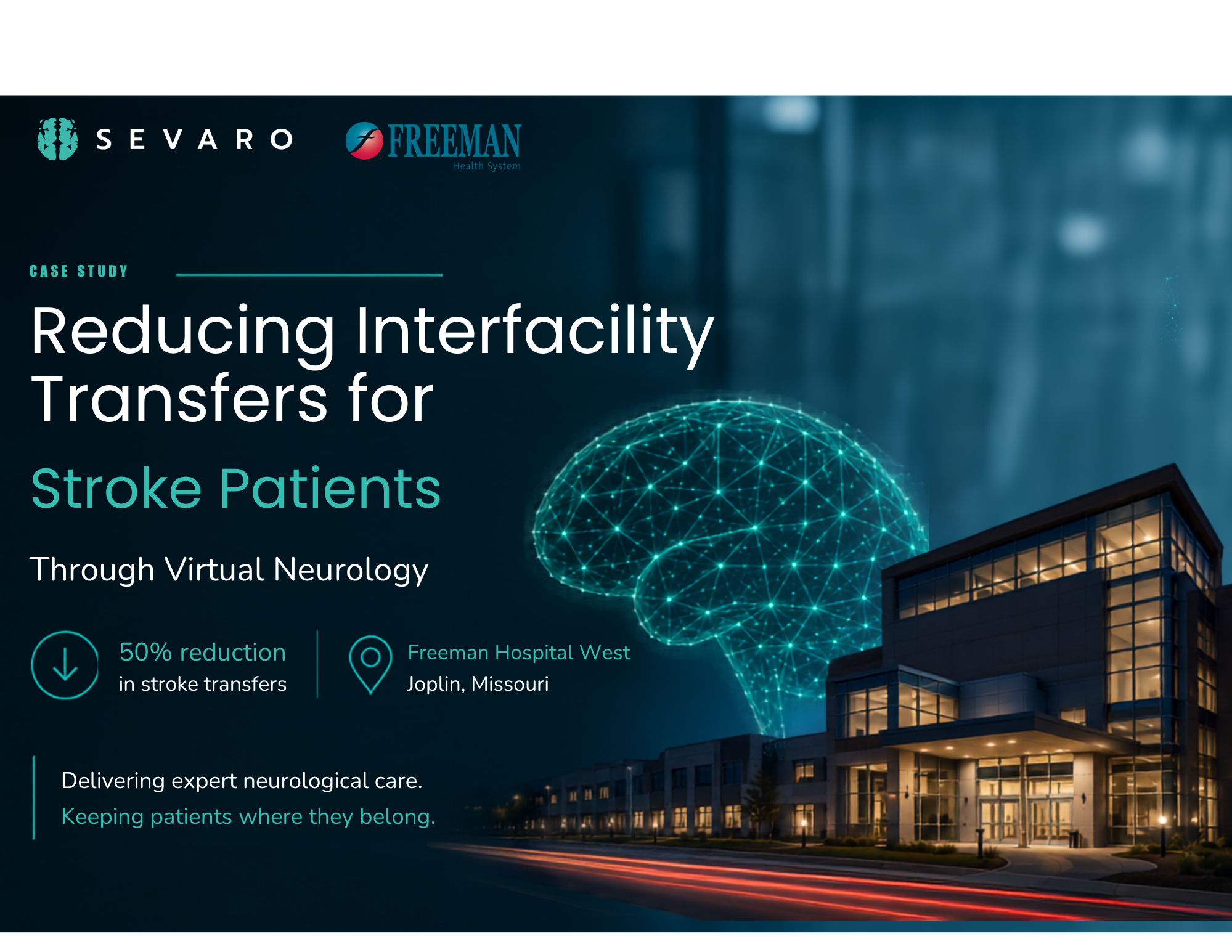
For community hospitals, stroke care often means difficult decisions, transfer patients out or manage complex neurological cases without immediate specialist support. With the introduction of Sevaro Health’s virtual neurology platform, Freeman Hospital West gained round-the-clock access to neurological expertise, streamlined stroke workflows, and advanced diagnostic support. This partnership empowered clinicians to confidently care for more stroke patients locally, cutting transfer rates in half, and keeping patients closer to home.
When a stroke patient comes through the doors of a community hospital, the clock for treatment starts immediately. Nearly 800,000 times a year across the U.S., hospitals face that issue. Too often, the next step isn’t treatment, it’s interfacility transfer, because somewhere along the way, that became the default decision.
Freeman Hospital West, a 339-bed acute care hospital serving the Joplin, Missouri region, sought to strengthen its neurological care capabilities while reducing interfacility transfers and maintaining high standards of evidence-based stroke care.
Prior to implementing Sevaro Health’s virtual neurology platform, Freeman’s stroke interfacility transfer rate told a story that hospital leadership already knew: patients were leaving because the right support wasn’t available at the right time.
Hospital leadership recognized that many interfacility transfers were unnecessary but were actually the result of gaps in timely neurological expertise and diagnostic resources. The partnership between Sevaro and Freeman Hospital West began to address this gap.
When Freeman Hospital West launched Sevaro’s virtual neurology program in April 2024, the point wasn’t to replace the expertise already there, but to have emergent care whenever a neurological case rolled in, even in the middle of the night.
Key components included:
From the start, Sevaro was embedded with Freeman’s clinical and operational teams to design workflows around the hospital’s actual patient population and care model, not the other way around. That hands-on partnership is what made adoption real and sustainable, not just a launch-day metric.
Between April 2024 and November 2025, Freeman Hospital West achieved sustained, measurable improvements in stroke interfacility transfer rates:
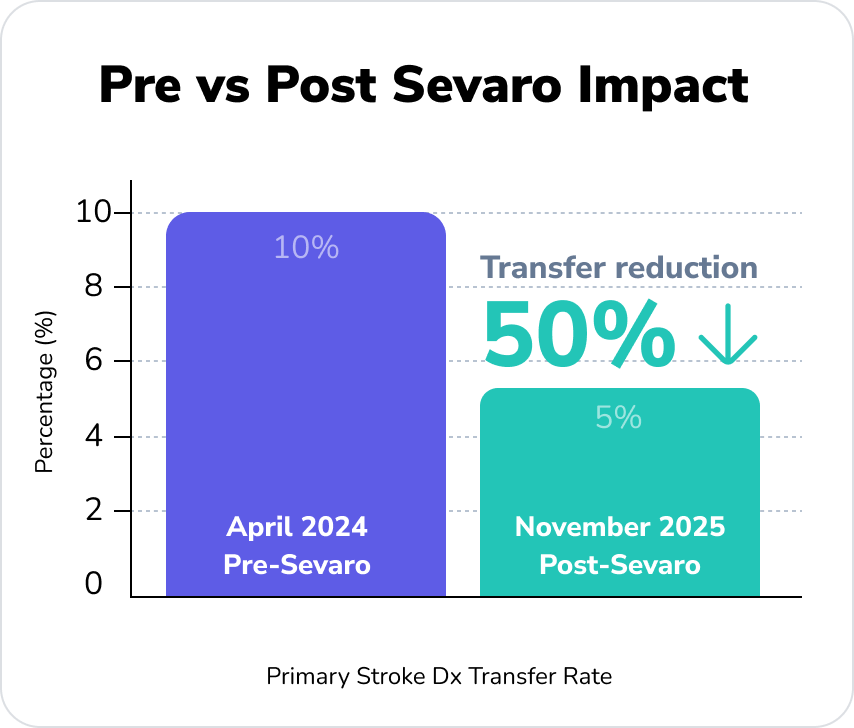
Before Freeman’s partnership with Sevaro, emergent and complex stroke patients who came in when the on-call specialist wasn’t available, the safest call was to start an interfacility transfer. Now, Freeman’s teams are keeping those patients in-house and managing them locally, with the same expert-level neurology support that a tertiary center would provide. The result: stroke interfacility transfers dropped by 50%, and more patients are getting timely, evidence-based care without leaving their family and community.
The partnership with Sevaro Health delivered benefits across clinical, operational, and patient experience domains:
By cutting stroke transfers in half this represents:
$480K in annual retained net revenue. This financial impact is achieved without recruiting full-time on-site neurologists, significantly lowering fixed labor costs while strengthening the neurological service line.
The patient journey below illustrates how Sevaro’s virtual neurology model supports continuous, high-quality stroke care across the inpatient stay, without requiring transfer.
Day 1 – Emergency Department (NIHSS 7):
Upon ED arrival, the patient received a rapid virtual neurology consultation. Real-time neurologist involvement supported rapid diagnosis, treatment decisions, and admission planning without any delays and uncertainty that may have triggered an interfacility transfer.
Day 2 – Inpatient Floor (NIHSS 3):
With improvement in neurological status, Sevaro neurologists provided follow-up rounding and continued oversight. This ensured care plans remained aligned with recovery progress and prevented late transfer scenarios.
Day 3 – Inpatient Floor:
Ongoing neurologist availability supported continued improvement and safe progression of care, without escalation or interfacility transfer to a tertiary center. The family remained local. The hospital retained the patient and revenue. The care quality matched, or exceeded, what a tertiary center would have provided.
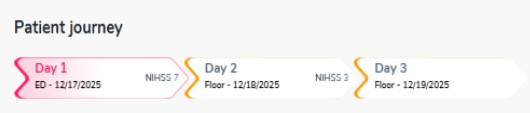
This journey highlights how early specialist access, continuity of care, and follow-up rounding reduce uncertainty, enabling patients to remain safely at their local hospital.
Freeman Hospital West’s success reflects a broader evidence base demonstrating that virtual neurology models like Sevaro’s address the root causes of unnecessary interfacility transfers.
National research consistently shows:
“Every patient deserves access to expert neurological care, regardless of geography. Virtual neurology allows community hospitals to deliver that expertise without asking patients and families to leave their community” – Dr. Chethan Sathya, Chief Physician Executive, Multi-Specialty Care, Sevaro
What Freeman Hospital West proved is that community hospitals don’t have to choose between keeping patients and giving them the best possible care. With Sevaro’s virtual neurology program, 24/7 consults, standardized workflows, EEG services, and follow-up care that doesn’t end at discharge, Freeman cut stroke transfers in half without compromising quality. And the care team had specialist support to back every decision.
This isn’t just a Freeman story. Community hospitals across the country are dealing with the same pressures: patients leaving because the specialist isn’t available, interfacility transfer rates climbing not out of clinical necessity but out of habit, and the financial hit that comes every time an ambulance or helicopter pulls away. Virtual neurology changes that equation, and Freeman’s results show it works. And the model scales. Any community hospital facing these same challenges can achieve similar outcomes when the right infrastructure and partnership are in place
The implications extend beyond a single hospital. Across the United States, community hospitals face identical pressures: rising interfacility transfer rates, limited specialist availability, and the challenge of serving their communities while maintaining financial sustainability. Virtual neurology offers a proven, scalable solution, one that reduces unnecessary interfacility transfers, improves patient and clinician satisfaction, and strengthens local healthcare delivery.
Sevaro is a physician-founded virtual neurology company delivering 24/7 telestroke, neurohospitalist rounding, neuro-ICU, EEG interpretation, and ambulatory clinic services, powered by the Synapse AI platform