Neurology Workforce Burnout Solutions: Creating a Sustainable Future Through Integrated Hybrid Care

Insights from the 2026 International Stroke Conference

By the Sevaro Health Editorial Team

Dr. Taking telestroke visit

Neurology programs across the United States face a crisis: patient demand is rising, subspecialists are scarce, and existing providers are burning out under unsustainable workloads. The result? Extended wait times, delayed diagnoses, unnecessary transfers, and fragmented care that puts patients at risk. This underscores the urgent need for neurology workforce burnout solutions that protect both the patients and the providers from the risks of a strained system. 


At the 2026 International Stroke Conference (ISC), Sevaro Health explored the most pressing question facing modern health systems: How can neurological care scale to meet growing demand without sacrificing quality, continuity, or clinician well‑being?  

In a joint presentation, Dr. Raj Narula, Founder and CEO at Sevaro Health and Dr. Melanie Winningham, Vice President of Clinical Strategy & Partnerships at Sevaro Health, outlined why the hybrid model is rapidly becoming the foundation of modern neurological care. 


Noteworthy Highlights: 

  • Nearly 42% of physicians are approaching retirement age, with burnout accelerating early departures from practice. 
  • Hybrid neurology care models integrate on site and virtual neurologists to extend coverage without increasing individual provider burden. 
  • Neurologists spend 40% of their time on documentation and administrative tasks – a primary driver of burnout. 
  • Coverage schedules enabled by hybrid models can reduce unsustainable 24/7 call demands. 
  • Health systems implementing hybrid models report improved provider satisfaction and retention alongside better patient access. 

The Neurology Workforce Crisis: Why Hybrid Models Matter

Dr. Narula opened the presentation by framing the scope of the crisis facing neurology programs nationwide.  The specialty faces a perfect storm:  

  • Subspecialty coverage gaps: Nearly 20% of the adult population live more than 60 minutes away from advanced neurological care.1 
  • Extended wait times: In rural communities, the average wait time for an outpatient neurology appointment can reach 86 days.2 
  • Fragmented technology: Disconnected systems create a massive burden for clinicians, reducing time clinicians spent on direct patient care. 
  • Patients “lost in the mix”: Approximately 22% of stroke patients are readmitted within a year of discharge, up to 53% of those are potentially avoidable with better coordination.3 

Dr. Winningham emphasized these statistics represent a human impact both for patients experiencing delays in care and for providers struggling under unsustainable workloads. Hybrid care models, Drs. Narula and Winningham argued, offer a practical, scalable solution to these pressures. 
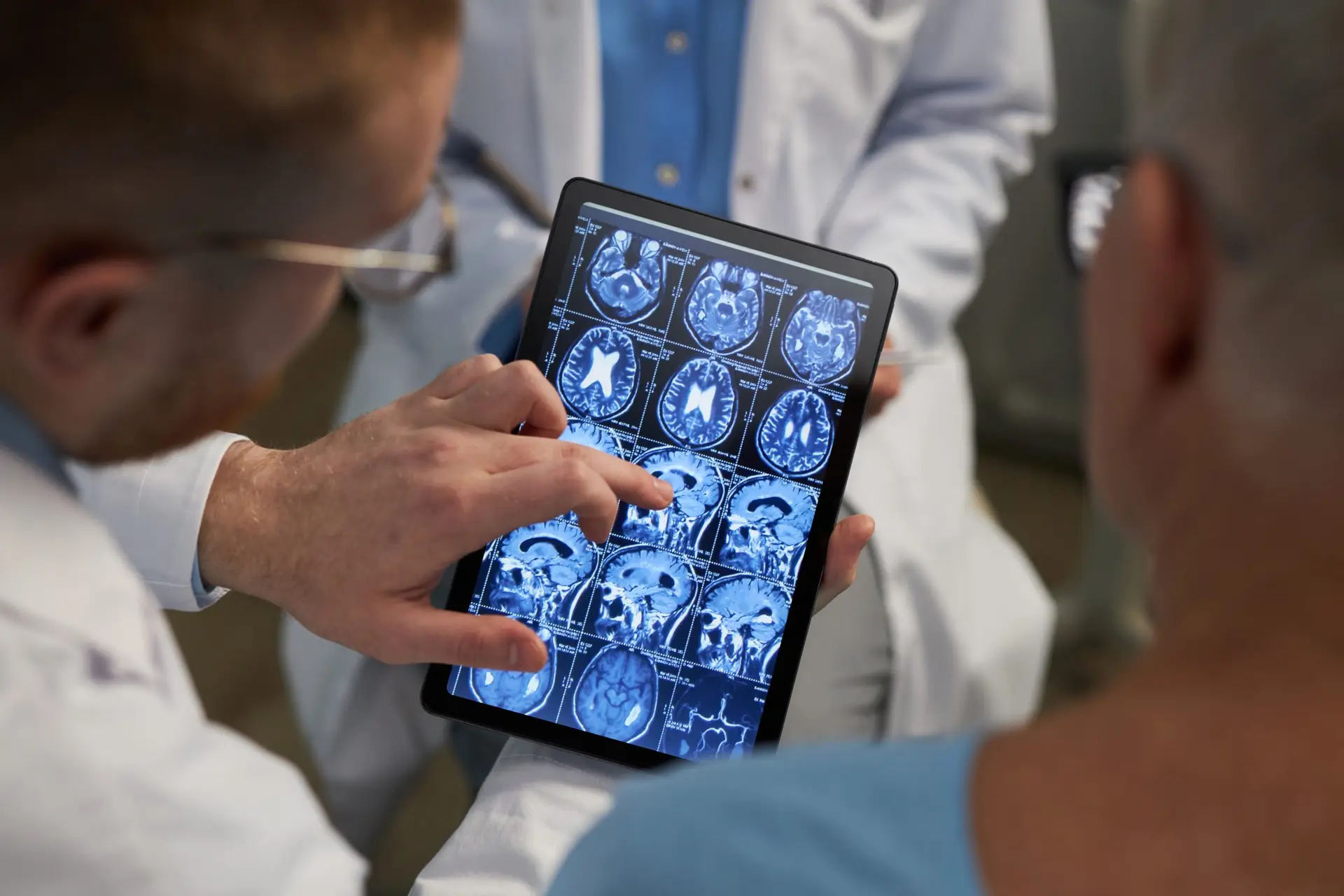
Telestroke Team Review

Hybrid Care Model: Neurology Workforce Burnout Solution Involves Integration, Not Replacement

The central thesis of the presentation was hybrid care models. Dr. Winningham emphasized that rather than viewing virtual neurology as a replacement for in‑person care, hybrid care models should be considered a force multiplier. This approach allows hospitals to extend the reach of their existing neurologists while ensuring patients receive timely, high‑quality care across the full neurological journey, from acute presentation through inpatient care, discharge, and outpatient follow-up. By removing the friction between on-site and virtual teams, hospitals can implement quality neurology workforce burnout solutions that reduce the load on local providers rather than adding to it. 

Successful Neurology Hybrid Care Models Require:

  • Integrated workflows: ensuring documentation and EMR integration are native to the current process 
  • Real‑time availability bypassing traditional call center bottlenecks to connect the patients to a neurologist in seconds. 
  • Direct clinician‑to‑clinician communication without unnecessary intermediaries, in real-time 

Neurological emergencies don’t follow a 9-to5-schedule. A hybrid neurology care model represents a paradigm shift in how health systems structure coverage, moving from a model that relies on in-person physicians absorbing all coverage needs, to one that distributes the workload sustainable across integrated teams of on-site and virtual specialists. Virtual neurologists can provide backup coverage, support week‑on/week‑off hospitalist models and help bridge any gaps while programs recruit permanent staff. This layered approach improves retention by reducing cognitive overload and allowing clinicians to practice at the top of their license. 

Clinical Benefits of Hybrid Neurology Care

The impact of hybrid models extends across the entire neurological care continuum, from acute stroke response through inpatient care, discharge planning, and outpatient care. 

How Hybrid Coverage Addresses Root Causes of Burnout

The ISC learning session highlighted how hybrid models target each major burnout driver: 

  • Robust inpatient rounding: Ensuring that patients on the floor receive specialized attention without overextending on-site staff.  
  • Neurocritical care coverage: Bridges the gap by bringing elite expertise to the bedside, working in tandem with the in-house care team to deliver immediate, high-quality care  
  • Reducing unnecessary hospital transfers: Allows patients to stay local, reducing family stress and strengthening trust in local facilities. 
  • Post‑discharge follow‑up: Through virtual neurology clinics, specialists can ensure the transition home is successful and can monitor the patient through the 14-day “high risk” period, to help reduce patient readmission rates.  

Reducing Neurologist Burnout with Integrated Technology

Data and technology play a critical role in making hybrid care sustainable. In fragmented systems, neurologists spend 40% of their time on documentation, navigating fragmented EHRs, and non-clinical tasks4Hybrid platforms, when designed by clinicians, enhance care delivery rather than complicate it.  

Key capabilities include:  

  • Automated documentation eliminating the need for 3-5 different systems 
  • Real‑time performance analytics that drive immediate improvements in patient care  
  • AI‑supported workflow optimization that intelligently routes consults to the appropriate specialist  
  • Seamless EMR integration working to eliminate duplicate data entry needs 

Hybrid care tools allow neurologists to focus on clinical reasoning and patient interaction rather than system navigation and administrative tasks. 

Retaining Care Locally: A Critical Neurology Workforce Burnout Solution

Health systems leveraging virtual neurologists alongside in‑house teams have reduced unnecessary transfers, shortened response times for stroke consults, and kept patients in their local communities whenever safe and appropriate. Beyond financial savings, these outcomes carry meaningful human benefits: fewer families traveling long distances, more continuity of care, and stronger trust between patients and their local hospitals. 

By sharing coverage and reducing unnecessary interruptions, hybrid care helps prevent neurologists from burning out. Clinicians gain flexibility and support which allows them to focus on patient care while maintaining sustainable workloads. 
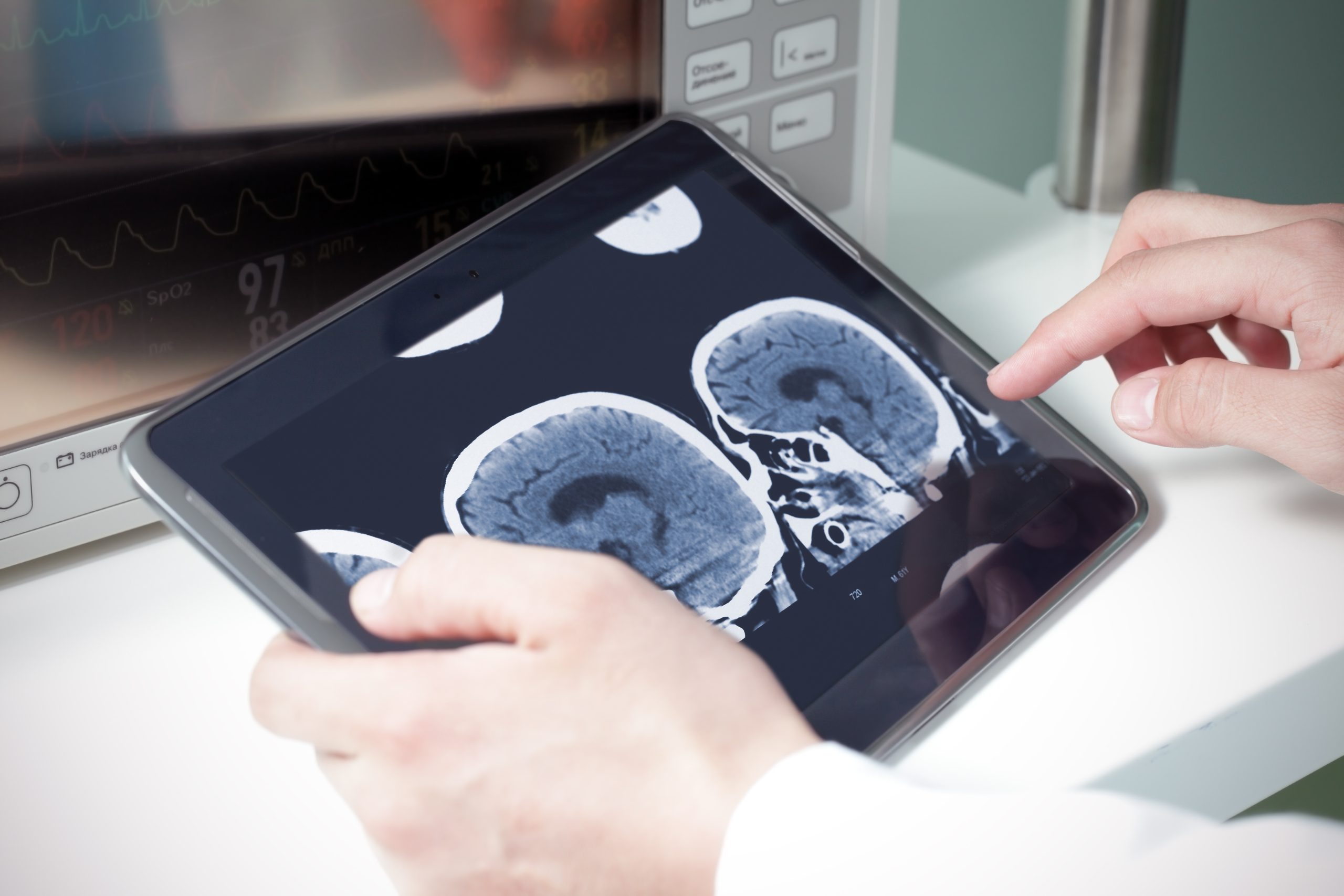
Hybrid Neurology

Implementing Hybrid Neurology Care

Importantly, hybrid models are not one‑size‑fits‑all. Successful programs tailor their approach based on available resources, patient volumes, and strategic goals.  

  • Bridge Model: Some hospitals use hybrid care as a temporary bridge to maintain safety and revenue while building in‑house teams;  
  • The Permanent Partnership: others adopt it as a permanent strategy to bring subspecialty expertise to rural or community hospitals that could not otherwise support those roles.  

What matters most is flexibility. Flexibility to adapt as programs grow, staffing changes, or patient needs evolve. This builds a foundation that allows for the highest quality care while avoiding neurologist burn-out. 

As the presentation concluded, a forward-thinking perspective on the evolution of neurology practice was shared by Dr. Narula stressed, “the future of neurology will be defined by collaboration, rather than competition between virtual and in-person care. Technology alone is not the answer; neither is virtual care in isolation. Instead, the next generation of neurological care will blend people, processes, and technology into a cohesive system that prioritizes access, quality, and sustainability.” 

The question is no longer whether a hybrid neurological care model works – the evidence is clear with 74% of hospitals leaders reporting that virtual and hybrid care models are now integral to their acute care delivery5. The question now is how quickly other health systems can implement them.  

Sustainability in neurology isn’t just about hiring more people; it’s about changing the way the work is distributed. By embracing Neurology Workforce Burnout Solutions that leverage the best of both virtual and on-site care, health systems can finally move away from a reactive ‘crisis’ mode. The path forward is clear: integrate, innovate, and prioritize the well-being of those who provide life-saving care 

Frequently Asked Questions

Q: What is a hybrid neurology care model? 
A: A hybrid neurology care model blends in‑person neurologists with virtual specialists who work as a single, integrated team. Patients and clinicians experience the same workflows and standards of care regardless of whether the neurologist is on site or remote. 


Q: Does virtual neurology replace on‑site neurologists? 
A: No. Hybrid care is designed to complement and support on‑site teams, not replace them. Virtual neurologists extend capacity, provide backup coverage, and help sustain programs during recruitment or growth periods.  


Q: How does hybrid care improve access to neurological services? 
A: Hybrid models expand coverage by making neurologists available during nights, weekends, surge events, and staffing transitions. This ensures patients receive timely consultations even when in‑house resources are limited. 


Q: What types of neurological care can be supported through hybrid models? 
A: Hybrid care can support the full neurological continuum, including acute stroke response, inpatient rounding, neurocritical care consultation, post‑discharge follow‑up, outpatient clinics, and ongoing care for conditions such as epilepsy, migraine, multiple sclerosis, and stroke recovery.


Q: Can hybrid models reduce hospital transfers and readmissions? 
A: Yes. By providing timely access to neurologists and enabling local management when appropriate, hybrid care reduces unnecessary transfers and helps prevent avoidable readmissions—keeping patients closer to home.  


Q: How do hybrid models impact clinician workload and retention? 
A: By sharing coverage and reducing unnecessary interruptions, hybrid care helps prevent burnout. Clinicians gain flexibility and support, allowing them to focus on patient care while maintaining sustainable workloads. 


Q: What role does technology play in hybrid neurology? 
A: Technology enables seamless communication, real‑time availability, EMR integration, documentation support, and performance analytics. When designed around clinical workflows, these tools enhance efficiency without disrupting care delivery. 


Q: Are hybrid models adaptable to different hospital environments? 
A: Hybrid care is highly flexible and can be tailored to each health system’s needs, whether as a temporary bridge during staffing shortages or a long‑term strategy for rural, community, or multi‑facility networks. 

  1. CDC, Disparities in Timely Access to Certified Stroke Care (2025); AAMC, The Complexities of Physician Supply and Demand (2024); 
  2. PubMed, Improving Wait-times in Outpatient Neurology (2025). 
  3. Kilkenny MF, Kim J, Sundararajan V, et al. Readmissions and mortality during the first year after stroke: data from a population-based incidence study. Frontiers in Neurology. 2020;11:636. doi:10.3389/fneur.2020.00636 
  4. Winningham M, Narula R, et al. It’s time to change our documentation philosophy: writing better neurology notes without the burnout. Frontiers in Digital Health. 2022;4:1063141. 
  5. American Hospital Association. 2026 Environmental Scan. American Hospital Association; 2025. Accessed 2/13/2026 

Sevaro Partners with NSCAC to Address Healthcare Gaps

February 18, 2026
Sevaro in the news thumbnail

NEW YORK, Feb. 18, 2026  — The National Specialty Care Access Coalition (NSCAC), a collaboration of more than 20 major US health systems, today announced its launch to address the growing breakdown in access to medical specialists across the United States. The coalition brings together health systems, clinicians, technology partners, and policy stakeholders to advance multispecialty, tech-enabled specialty care models designed to expand access for rural communities and underserved urban neighborhoods. Unlike existing efforts that focus on single specialties, individual technologies, or isolated pilot programs, the NSCAC is a health system coalition designed to align multispecialty care models, policy reform, and real-world implementation at national scale.

The launch comes at a pivotal moment. With the introduction of the Centers for Medicare and Medicaid Services (CMS) Rural Health Transformation initiative and more than $50 billion in new federal and state investment, there is unprecedented momentum to rethink how specialty care is delivered nationwide. Yet access gaps remain severe. Nearly 20 percent of Americans live in rural areas, while only about 9 percent of physicians practice there, leaving many rural hospitals without reliable access to core specialties such as neurology, cardiology, maternal fetal medicine, critical care, dermatology, surgery and pediatrics. Similar shortages affect underserved urban communities, where demand for specialty care continues to far exceed available capacity.

The coalition is convened and chaired by Dr. Chethan Sathya, physician executive and nationally recognized leader in public health innovation, and Dr. Raj Narula, physician and national leader in tech-enabled specialty care access. The NSCAC’s founding 20 plus large health systems collectively deliver care across vast rural regions and high-need urban communities nationwide.

“Access to specialty care should never depend on a patient’s ZIP code, income, or background. Advancing health equity requires coordinated, systemic action. Rutgers Robert Wood Johnson Medical School and Rutgers New Jersey Medical School are proud to stand with the National Specialty Care Access Coalition to dismantle barriers, expand access, and ensure every community receives the expert care it deserves,” says Amy P. Murtha, MD, Dean of Rutgers Robert Wood Johnson Medical School, and Robert L. Johnson, MD, FAAP, Interim Chancellor of Rutgers Health and Dean of Rutgers New Jersey Medical School.

To support the coalition’s policy and infrastructure work, additional thought partners include former CMS leaders, The Children’s Hospital Association, state hospital associations, The Center for Telehealth and eHealth Law, and technology collaborators that work across rural communities such as T-MobileSevaro Health, and Samsung. Participation does not imply endorsement of any single technology platform. Together, the health system coalition brings leaders together around a shared mandate to move beyond fragmented solutions and define scalable, outcomes driven approaches to specialty care access nationwide. 

The National Specialty Care Access Coalition will focus on three initial priorities:

  • Standardizing Care Models: Developing scalable, multispecialty care pathways designed for the operational realities of rural hospitals and high-need urban health systems.
  • Advancing Policy Reform: Producing a landmark white paper with unified recommendations for the Centers for Medicare and Medicaid Services and state Medicaid agencies to modernize reimbursement, licensing, and regulatory frameworks for virtual and network-based specialty care.
  • Accelerating Implementation: Sharing real-world learnings on implementation barriers and facilitators, while enabling collaboration among health systems and rural partners to launch pilots across high-impact specialties including neurology, cardiology, maternal fetal medicine, neonatology, critical care, and chronic disease management to inform national standards.

“NSCAC membership affords Dartmouth Health and other members a dynamic opportunity to continue shaping the future of rural healthcare through innovation in technology and telehealth,” said Kevin M. Curtis, MD, MS, Medical Director, Dartmouth Health Connected Care and Center for Telehealth. By collaborating with peer institutions, we can accelerate solutions that overcome longstanding barriers to access, workforce capacity, transportation, cost, and equity. As one of the most rural health systems in the country, Dartmouth Health has long leveraged telehealth to connect patients with the care they need. The advancements generated by NSCAC will be transformative in expanding access and strengthening care delivery across rural communities, including northern New England.”

“We look forward to any opportunity to contribute to sustainability of rural healthcare. This seems like an opportunity that will help us lean into that important part of our mission,” added Adam Hornung, VP Medical Transport-Telehealth-Transfer Centers-Outreach Services, Intermountain Health.

The National Specialty Care Access Coalition will begin formal work in early 2026, with additional health systems invited to submit expressions of interest as the coalition expands.

About the NSCAC

The NSCAC is a national collaborative uniting health systems, clinicians, technology innovators, and policy leaders to confront the widening shortage of medical specialists in rural communities and underserved urban neighborhoods. The coalition focuses on building scalable, tech-enabled multispecialty care models that close persistent access gaps and modernize how specialty care is delivered nationwide.

Founded by leading clinical, public health, and health system experts, NSCAC advances unified standards, policy reform, and multi-system pilots to ensure timely and equitable access to specialty care across the United States.

Press Contact

Info@SpecialtyCareAccess.org

SpecialtyCareAccess.org

Tele-Stroke Neurologist: Part Time

Part Time

Job Details

Position title

Tele-Stroke Neurologist – Part Time

Shift Availability

12 Hour Shifts – 7:00AM – 7:00PM and 7:00PM – 7:00AM EST

7 shifts per month including 2 weekend and 2 night shifts

Additional night shift availability is strongly encouraged and compensated at a premium rate

Company Description

Company Description

Sevaro is a leading tele-neurology and tele-stroke company that combines compassion, care, and innovation to transform neurological healthcare. Our name is rooted in the word “Seva,” meaning compassion and care for others — reflecting our commitment to delivering patient-centric stroke and neurological care through proprietary technology.

By leveraging advanced telemedicine solutions, Sevaro improves stroke response times, access to specialty care, and patient outcomes nationwide. We remain at the forefront of neurological innovation to support hospitals, clinicians, and the patients they serve.

Position Highlights

As a Part-Time Tele-Stroke Neurologist, you will evaluate and manage acute stroke patients virtually using HIPAA-compliant telemedicine technology. This role offers the opportunity to deliver high-impact, time-sensitive stroke care with competitive compensation and a flexible, physician-friendly schedule.

Sevaro’s proprietary platform, Synapse, supports real-time clinical decision-making, empowering neurologists to provide efficient, evidence-based stroke care. We prioritize physician satisfaction, work-life balance, and clinical excellence in a collaborative, growth-oriented culture.

You don’t work for us
you grow with us!

Position Requirements

  • Board Certified or Board Eligible in Neurology
  • Stroke / vascular neurology experience strongly preferred
  • Excellent communication skills with a focus on physician-patient interaction
  • Comfortable using HIPAA-compliant audio/video technology, EMRs, and PACS
  • Active, unrestricted medical license in any U.S. state (or ability to obtain)
  • Prior hospital-based, in-person stroke and neurology experience preferred
  • Prior tele-stroke or teleneurology experience preferred

Program Offering Includes

  • Competitive per-shift compensation
  • Administrative pay for approved non-clinical duties
  • Equity / stock option eligibility
  • Flexible scheduling
  • Highly collaborative, physician-first culture
  • Technology provided
  • Licensing and credentialing costs fully covered by Sevaro

Tele-Stroke Neurologist: Full-Time

Full Time

Job Details

Position title

Tele-Stroke Neurologist – Full Time

Shift Availability

12 Hour Shifts – 7:00AM – 7:00PM and 7:00PM – 7:00AM EST

15 shifts per month including 4 weekend shifts and 2 night shifts

Additional night shift availability is strongly encouraged and compensated at a premium rate

Company Description

Sevaro is a leading tele-neurology and tele-stroke company that combines compassion, care, and innovation to transform neurological healthcare. Our name is rooted in the word “Seva,” meaning compassion and care for others — reflecting our commitment to delivering patient-centric stroke and neurological care through proprietary technology.

By leveraging advanced telemedicine solutions, Sevaro improves stroke response times, access to specialty care, and patient outcomes nationwide. We remain at the forefront of neurological innovation to support hospitals, clinicians, and the patients they serve.

Position Highlights

As a Tele-Stroke Neurologist, you will evaluate and manage acute stroke patients virtually using HIPAA-compliant telemedicine technology. This role offers the opportunity to deliver high-impact, time-sensitive stroke care with competitive compensation and a flexible, physician-friendly schedule.

Sevaro’s proprietary platform, Synapse, supports real-time clinical decision-making, empowering neurologists to provide efficient, evidence-based stroke care. We prioritize physician satisfaction, work-life balance, and clinical excellence in a collaborative, growth-oriented culture.

You don’t work for us
you grow with us!

Position Requirements

  • Board Certified or Board Eligible in Neurology
  • Stroke / vascular neurology experience strongly preferred
  • Excellent communication skills with a focus on physician-patient interaction
  • Comfortable using HIPAA-compliant audio/video technology, EMRs, and PACS
  • Active, unrestricted medical license in any U.S. state (or ability to obtain)
  • Prior hospital-based, in-person stroke and neurology experience preferred
  • Prior tele-stroke or teleneurology experience preferred

Program Offering Includes

  • Competitive compensation package
  • Equity offering 
  • Flexible scheduling
  • Highly collaborative, physician-first culture
  • Opportunities for Regional Medical Director leadership roles

Full Time Benefits Include:

  • Health, vision, dental, and life insurance
  • 401(k) with 4% match
  • Sign-On Bonus for Full Time
  • Generous Stock Option Offering
  • CME Reimbursement Stipend
  • Technology and malpractice coverage provided
  • Licensing and credentialing costs fully covered by Sevaro

Rapid Stroke Response Saves Lives: Turning Minutes into Miracles

How Seamless Teamwork and Technology Delivered a Full Recovery in Record Time

Stroke patient awaiting telestroke visit

In mid 2025, a male patient was urgently transported by Emergency Medical Services (EMS) to a partnering Emergency Department, where Sevaro serves as the hospital’s trusted neurology partner. The patient was found at home exhibiting classic signs of acute stroke: right-sided paralysis, facial droop, and expressive aphasia. Based on the estimated time of symptom onset, he was outside the therapeutic window for TNK (tenecteplase) administration.

Summary

  • A patient presented to a partner emergency department with severe acute ischemic stroke symptoms and an NIHSS score of 23, indicating a high‑risk large vessel occlusion.
  • CT and CTA imaging confirmed a complete occlusion of the left M1 segment of the middle cerebral artery, requiring urgent intervention.
  • Mechanical thrombectomy achieved TICI 3 reperfusion with a door‑to‑reperfusion time of 41 minutes.
  • The patient made a complete neurological recovery, improving from NIHSS 23 to 0 and was discharged home four days later.

Initial Assessment

Upon arrival, the stroke team conducted a rapid neurological evaluation, assigning the patient a National Institutes of Health Stroke Scale (NIHSS) score of 23; indicative of a severe stroke. The hospital’s Code Stroke protocol was immediately activated.

Imaging and Diagnosis

Within minutes, the patient underwent CT and CTA imaging. Results revealed a complete occlusion of the left M1 segment of the middle cerebral artery (MCA), confirming a large vessel occlusion (LVO)—a life-threatening condition requiring urgent intervention.

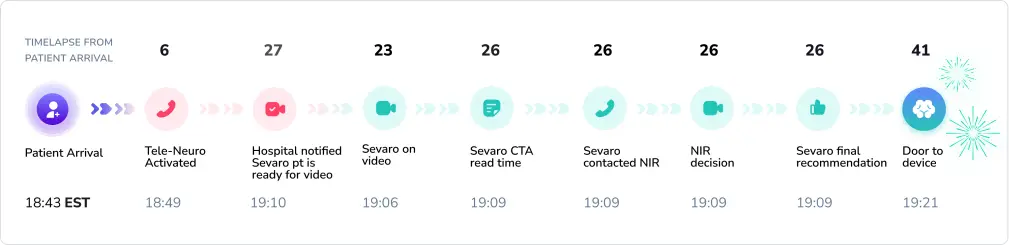
Sevaro's consulting neurologist on this case contacted local NIR and began coordination of care in less than 1 minute of CTA review.

Coordinated Care in Action

In this acute stroke case, Sevaro’s neurologist played a critical role in ensuring timely and coordinated care. Sevaro’s neurologist was on the video screen and prepared to assess the patient at the moment the patient arrived from the imaging suite, even prior to notification from the hospital staff eliminating any delay in evaluation or escalation of care.

CTA imaging was reviewed promptly upon availability, and Neurointerventional Radiology was contacted immediately based on the findings.

This real-time coordination and readiness supported rapid clinical decision-making and contributed to an excellent patient outcome. The case underscores the impact of Sevaro’s integrated technology and proactive clinical workflow in supporting hospital teams and optimizing stroke care delivery.

From door to diagnosis, every second counted — and our team delivered.

Telestroke visit flow

Once in the neurointerventional suite, the patient underwent mechanical thrombectomy.

Discharge and Recovery

Remarkably, the patient was discharged home just four days after arrival with a final NIHSS score of 0—indicating complete neurological recovery. This outcome underscores the effectiveness of a tightly integrated stroke response system.

System Performance

This real-world case exemplifies the strength of a multidisciplinary, time-sensitive stroke care pathway. From EMS prenotification and Emergency Department triage to Sevaro’s remote neurology assessment and swift neurointerventional radiology (NIR) action, every phase of care was executed with precision. Seamless handoffs and synchronized teamwork ensured that no time was lost.

Key metrics: 

  • Initial call to Sevaro response: 33 seconds
  • Sevaro Ready for video call activation to on screen: -4 minutes
  • Sevaro CTA read to NIR contact: 0 minutes
  • Door-to-reperfusion time: 41 minutes
  • TICI 3 reperfusion achieved
  • NIHSS improvement: 23 ➡️ 0

Conclusion

This case is a testament to the power of collaboration, technology-enabled decision-making, and protocol-driven care. It highlights how a well-orchestrated stroke system can dramatically improve patient outcomes by turning a life-threatening event into a story of full recovery.

Ready to be the next hospital to revolutionize neurological care?  

Frequently Asked Questions

Q: What made this stroke case particularly high‑risk?

A: The patient presented with severe neurological deficits and an NIHSS score of 23, indicating a large, life‑threatening stroke caused by a complete occlusion of a major cerebral artery

Q: Why was thrombolytic therapy not used?

A: Based on the estimated time of symptom onset, the patient was outside the therapeutic window for TNK administration, making mechanical thrombectomy the appropriate intervention

Q: What role did Sevaro play in the patient’s care?

A: Sevaro’s consulting neurologist conducted rapid remote assessment, reviewed imaging in real time, and immediately coordinated with neurointerventional radiology to accelerate escalation of care

Q: How quickly was care escalated after imaging?

A: CTA imaging was reviewed as soon as it became available, and NIR was contacted within the same minute, eliminating delays between diagnosis and intervention.

Q: How did Sevaro’s technology impact response time?

A: Sevaro’s integrated platform enabled the neurologist to be live on video and ready to assess the patient before formal notification, supporting continuous momentum in care delivery

Q: What were the key performance metrics in this case?

A: Key metrics included a 33‑second initial response to Sevaro, immediate CTA‑to‑NIR communication, a 41‑minute door‑to‑reperfusion time, TICI 3 reperfusion, and full neurological recovery

Q: What was the patient outcome?

A: The patient achieved complete neurological recovery, was discharged home after four days, and had a final NIHSS score of 0, demonstrating the effectiveness of the coordinated stroke response

Q: What does this case illustrate for health systems?

A: This case highlights the value of a tightly integrated, technology‑enabled stroke care model where proactive neurology coverage and multidisciplinary coordination can dramatically improve outcomes

Skip to content